Currently Empty: £ 0.00

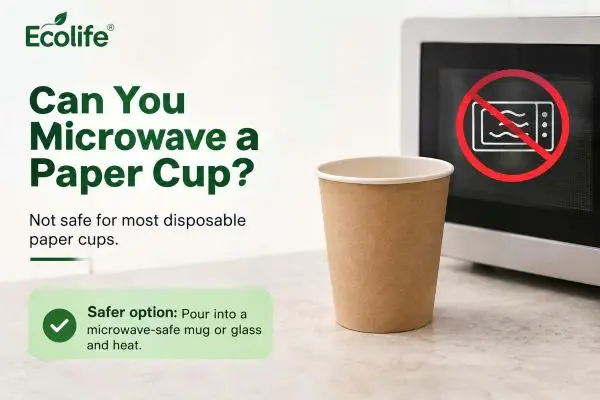
Most disposable paper cups are not safe to microwave. A standard takeaway cup carries a thin polyethylene (PE) or wax lining that was never built for microwave heat, so the lining can soften, the seam can leak, the cup can collapse, and small amounts of unwanted substances may pass into your drink. Only a cup printed with a clear microwave-safe label has been tested for this, and most coffee cups carry no such label. The safe move is simple: pour the drink into a microwave-safe ceramic mug or glass first, then heat.
This guide explains what a paper cup is made of, the three risks microwave heat creates, whether cup type changes the answer, how to spot a genuinely microwave-safe cup, and the safer ways to reheat. It closes with practical guidance for café and takeaway owners handling reheating requests.
What a paper cup is actually made of
A paper cup is not just paper. The body is paperboard, which makes up the large majority of the cup by weight, and the inside is coated with a thin waterproof lining because bare board would go soggy in seconds.
The most common lining is polyethylene (PE), a food-grade plastic; other cups use wax, PLA (a plant-based bioplastic), or a water-based (aqueous) coating. The side and base seams are held together with glue. That lining and glue, not the board, are what react badly to microwave heat.
Two points matter here. First, PLA and water-based coatings are not the same thing: PLA is a bioplastic, an aqueous coating is a sprayed water-based barrier, and they behave differently when heated.
Second, even a plastic-free paper cup is not microwave-safe by default. Paper still scorches, warps and tears, so removing the plastic removes only one of the risks. If you want the full breakdown of coatings, our guide to PLA vs PE lining covers how each type performs.
Why paper cups aren’t made for the microwave
Microwaving a paper cup creates 3 main risks: chemicals leaching into the drink, the cup melting and leaking, and, in the worst case, fire. Each one is explained below.
Chemicals leaching into your drink
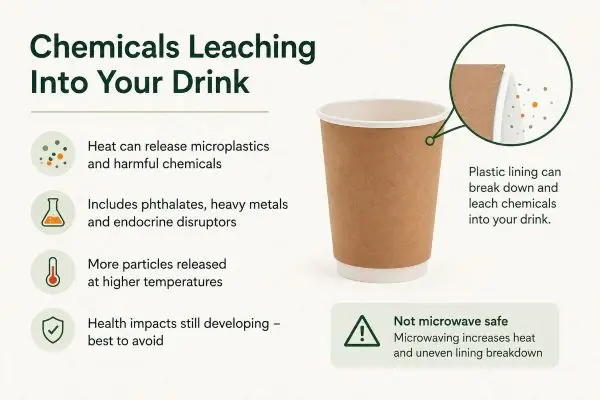
Heat can drive tiny plastic particles and additives out of the lining and into your drink. In a 2024 study reported by EurekAlert! (AAAS), the plastic lining of paper cups exposed to hot water at 85°C broke down within minutes and released microplastics along with phthalates, heavy metals such as lead, chromium and nickel, and endocrine-disrupting compounds.
A separate study published in Foods (via NCBI) measured microplastic release from PE-coated paper cups rising with temperature across 4°C, 50°C and 80°C, and researchers at the University of New Mexico reported PE-coated paper cups shedding 675 to 5,984 particles per litre into hot liquid.
Microwaving pushes a cup past ordinary hot-drink temperatures and heats the lining unevenly, which is a harsher condition than a normal pour. The health picture is still developing, so treat these as reasons to avoid the practice rather than settled outcomes.
For the wider question of contaminants, see whether paper cups contain PFAS or BPA.
Melting, leaks and a collapsing cup
Microwave heat softens the lining and weakens the seam glue at the same time, so the cup warps, the base goes soft, the seam can spring open, and the whole cup can sag or collapse. The everyday result is a leak of scalding liquid, a burnt hand and a mess in the microwave. A cup that felt sturdy holding a fresh coffee behaves very differently once its plastic skin is heated from the inside out.
Fire risk, especially with an empty cup
Paper can scorch or catch fire if it overheats, and a microwave heats unevenly, creating hot spots. An empty cup is the real danger: with no liquid to absorb the microwave energy, that energy has nowhere to go, so temperatures climb fast and the risk of overheating and ignition rises sharply. One detail most guides miss: metallic ink, a foil rim or a lid with any metal part can spark and arc inside the microwave. Keep the warning in proportion, this is uncommon, but it is the reason an empty or metal-trimmed cup should never go in.
Does the type of cup change the answer?
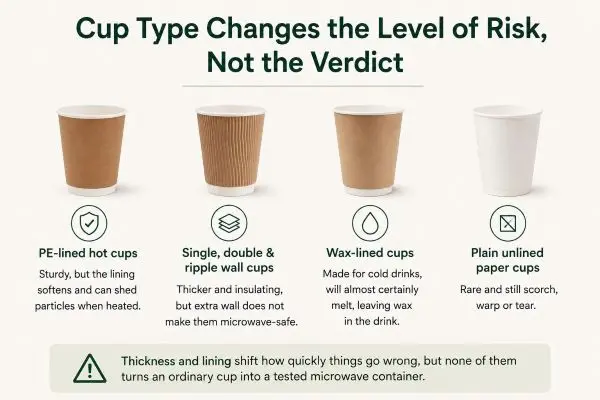
Cup type changes the level of risk, not the verdict. The answer stays the same across the range: don’t microwave standard paper cups. Here is how the common types behave:
• PE-lined hot cups are the sturdiest, yet the lining still softens and can shed particles when heated.
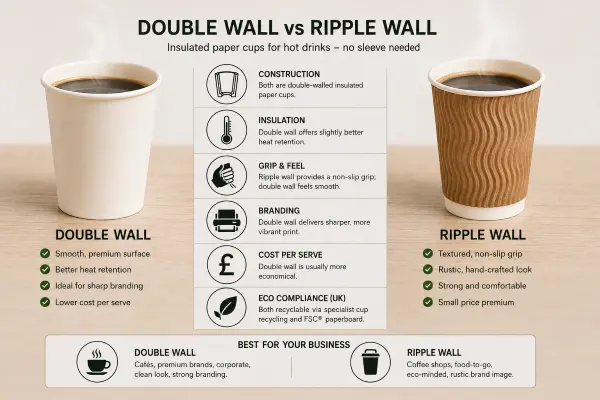
• Single, double and ripple wall cups are thicker and more insulating, so they stay comfortable to hold, but the extra wall does not make them microwave-safe.
• Wax-lined cups, usually made for cold drinks, will almost certainly melt, leaving wax in the drink.
• Plain unlined paper cups are rare and still scorch, warp or tear.
Thickness and lining shift how quickly things go wrong, but none of them turns an ordinary cup into a tested microwave container.
Are any paper cups microwave-safe?
Yes, but only a cup the manufacturer has printed as microwave-safe and tested for it, and most takeaway cups carry no such label. A microwave-safe marking means the material passed food-contact testing showing it will not melt, deform or leach regulated chemicals above set limits at microwave temperatures. To check your cup:
• Look on the base or side for the words “microwave safe” or a small wavy-lines symbol.
• Treat any cup with no label as not safe to microwave.
• Remove the lid and anything metallic before heating, and never microwave the cup empty.
Note: the 30 to 60 second “water test” some sites suggest is a rough check only, not a substitute for an official label. Bear in mind, too, that a microwave-safe label confirms the cup won’t melt or leach regulated chemicals; it does not certify zero microplastic release, which current testing does not measure.
Safer ways to reheat a drink
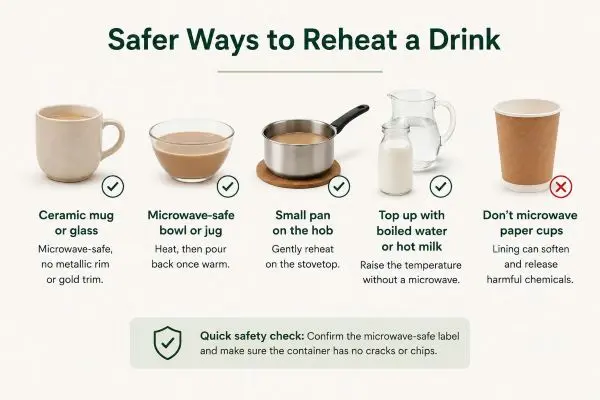
The safest method is to pour the drink into a microwave-safe container first, then heat. Reliable options include:
• Ceramic mug or glass marked microwave-safe, with no metallic rim or gold trim.
• A microwave-safe bowl or jug, then pour back once warm.
• A small pan on the hob, gently reheating on the stovetop.
• Topping up with freshly boiled water or hot milk to lift the temperature without any microwave at all.
Quick safety check before you heat: confirm the microwave-safe label and make sure the container has no cracks or chips.
Handling reheating requests in your food business
The section above answers the safety question for the person drinking the coffee. For café and takeaway owners, the same facts become an operating question: how to serve hot drinks so nobody needs a microwave at all.
Reheating a takeaway cup is a food-safety and liability risk you can design out. A few practical habits:
• Brief staff never to microwave takeaway cups, for customers or for themselves.
• Serve dine-in customers in ceramic mugs, which reheat safely and cut disposable use.
• Use well-insulated cups so drinks stay hot longer and reheating requests drop, and avoid making drinks far in advance.
• If a drink must be reheated, warm it in a microwave-safe jug or mug, then pour into the paper cup; slower, but safe.
EcoLife’s PE-lined double wall and ripple cups in 8oz and 12oz are built for serving hot drinks straight from the pour, which keeps them hotter for longer and reduces the temptation to reheat. For choosing the right format, see our guide to the best paper cups for hot drinks.
Frequently Asked Questions
Can you microwave a paper coffee cup?
Generally no. Most paper coffee cups carry a PE or wax lining not designed for the microwave, so they can melt, leak or release small amounts of chemicals. Use one only if it is printed microwave-safe; otherwise pour the coffee into a ceramic mug and heat that.
What does a “microwave-safe” label actually mean?
A microwave-safe label means the product was designed and tested to withstand microwave heat without melting, deforming or leaching regulated chemicals above safe limits into food. Not every cup carries it, so always check the base or side of the cup before heating.
Is a ceramic mug safer than a paper cup for the microwave?
Yes. A ceramic mug with no metallic rim has no plastic lining or seam glue to melt or shed, and ceramic and glass tolerate high heat well. That makes a plain ceramic mug a far safer choice for reheating a drink.
Can you microwave a paper cup with the lid on?
No. Plastic PP or PS lids can warp or leach when heated, and any metal detail can spark; an all-paper lid can scorch or deform. If you must reheat a microwave-safe cup, always take the lid off first.
What can I use instead to reheat a drink?
Pour the drink into a microwave-safe ceramic mug, glass or labelled container, or reheat it gently in a small pan on the hob. Adding freshly boiled water or hot milk also lifts the temperature. Avoid any container with metal.
What types of disposable cups suit a takeaway coffee shop?
Takeaway coffee shops usually choose double wall or ripple paper cups for hot drinks, since the extra wall insulates the hand and holds print well, paired with cold paper cups for iced coffee and cold brew.
Sources
• Ferhat et al., Microplastic Release from Single-Use Plastic Beverage Cups, Foods (NCBI)
• University of New Mexico Health Sciences, Cup Contamination research
• EurekAlert! (AAAS), 2024 disposable paper cup leaching study
• Release of microplastics from commonly used plastic containers (meta-analysis), ScienceDirect